


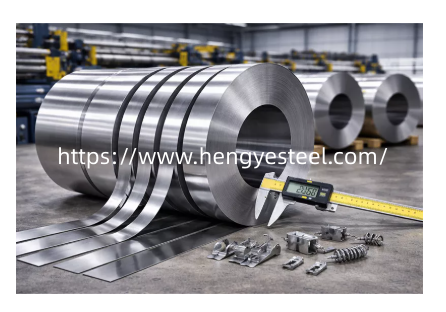
In modern manufacturing, the quality of a finished component often depends on decisions made long before production begins. Material selection influences how easily a part can be shaped, how well it performs during daily use, and how consistently it can be produced. For manufacturers working with metal components, Carbon Steel Strip offers a practical material option because its composition and processing condition can be matched to different industrial requirements. From precision hardware to mechanical parts and cutting tools, its value comes from the relationship between material characteristics, manufacturing methods, and the purpose of the final product.
The appeal of carbon steel begins with its adaptable material composition. Carbon content influences the steel's hardness, strength, and response to heat treatment, while other elements and manufacturing conditions can further affect its behavior. This makes material selection an important part of product development rather than a routine purchasing decision. A material intended for a formed component may need different characteristics from one used in a cutting edge or a mechanical part exposed to repeated movement. Understanding these distinctions helps manufacturers choose a suitable steel type before investing time in further processing.
Surface condition also deserves attention. During storage, transportation, and manufacturing, steel can encounter moisture, friction, and contact with other materials. A clean and uniform surface can make subsequent operations easier to manage, particularly when components require stamping, cutting, bending, or additional finishing. For products with visible metal surfaces, appearance may also influence the choice of material and the finishing methods used after fabrication.
Buyers should begin the selection process by examining the finished component rather than choosing a steel product solely by its general category. Its intended function, working environment, forming method, and expected service conditions all affect the decision. For example, a part that undergoes repeated bending may require a different material condition from a component that needs to retain a firm cutting edge. Manufacturers should also consider whether the steel will be stamped, machined, heat-treated, or assembled with other materials.
Communication with the supplier is another important part of purchasing. Buyers can provide drawings, sample components, processing descriptions, or details about the final application. These references help the manufacturer understand the actual production requirements and recommend a suitable material. It is also useful to discuss surface expectations, edge conditions, packaging, and inspection procedures before an order is confirmed. Clear communication at this stage can reduce misunderstandings during production and help establish a more reliable supply relationship.
Processing technology determines how effectively the selected material can be prepared for its intended use. Cold rolling, annealing, leveling, and slitting each serve a different purpose within steel strip manufacturing. Cold rolling helps refine the material's shape and surface condition, while annealing can adjust its response to later forming operations. Leveling supports a more even material profile, and slitting prepares coils for the widths required by individual production processes. The coordination of these operations influences how the steel behaves when it reaches the customer's workshop.
Quality control is not limited to inspecting the finished coil. Monitoring material condition throughout production helps identify inconsistencies before they affect later operations. Surface inspection, process monitoring, and batch management all contribute to dependable manufacturing. For customers operating continuous production lines, consistency between deliveries can be particularly important because unexpected material differences may require adjustments to tooling, forming conditions, or inspection routines.
The practical experience of using steel strip is closely connected to how well it fits into an existing workflow. Material that feeds smoothly into processing equipment can help operators maintain an orderly production sequence. Predictable forming behavior also makes it easier to plan stamping, cutting, and assembly operations. When a material arrives with suitable packaging and clear identification, receiving teams can handle it more efficiently and reduce the possibility of confusion during storage or production scheduling.
Design considerations extend beyond the shape of the finished metal part. The surface texture, edge appearance, and response to finishing treatments can influence how a component looks after fabrication. In applications where the metal remains visible, a consistent surface may support a cleaner product appearance. In functional components, designers may give greater attention to how the material interacts with adjoining parts, coatings, or assembly processes. These details connect material engineering with the visual and practical expectations of the finished product.
Carbon steel strip is used across different manufacturing fields, including automotive components, garden tools, saw blades, textile accessories, and mechanical products. Each application brings its own combination of material and processing requirements. Dongyang Hengye Steel Strip Co., Ltd. focuses on precision cold-rolled and heat-treated steel strip production, serving customers across several industrial sectors. Its manufacturing capabilities include material selection and process customization, supporting applications that require careful coordination between steel characteristics and downstream production needs.
As product designs and manufacturing workflows continue to develop, buyers increasingly need suppliers who can understand the purpose behind a material request. A useful discussion covers not only the steel itself but also the component design, processing route, surface expectations, and conditions in which the finished part will operate. Dongyang Hengye Steel Strip Co., Ltd. works with customers on steel strip requirements for varied industrial applications. More information about its products and manufacturing services is available at https://www.hengyesteel.com/










 Vietnam